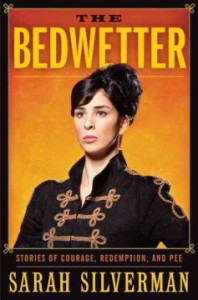
The Bedwetter
by Sarah Silverman
[Book]
view/request
Comedian and actor Sarah Silverman is known for her outrageously rude humor which belies her ingenuous appearance. Her memoir, subtitled “stories of courage, redemption, and pee,” revels in contradictions and brilliant comic timing. Silverman uses shame to promote self-respect. Her “potty humor” is bizarrely sophisticated. She uses meta-political incorrectness to express sincere liberal tolerance. She endears herself to her audience through obnoxiousness.
It’s hard to tell how much of these stories are factually true, but in Silverman’s comic style, the exaggeration and twistedness bring out a deeper truth.
Note: The subject matter and the short chapters make this ideal bathroom reading, though you might lose track of time in there, and the people waiting outside will hear you laughing.
Reviewed by Faith
Tagged: Actors, Memoir, Non-fiction
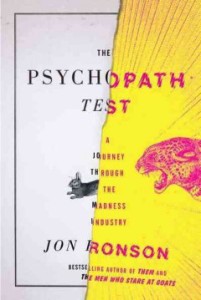
The Psychopath Test
by Jon Ronson
[Book]
view/request
The popular fictional sleuth Sherlock Holmes once stated,“when you have eliminated the impossible, whatever remains, however improbable, must be the truth.”
The Psychopath Test, a work of non-fiction, begins as a real life mystery to discover the meaning and motivation behind selected mailings of a strange bound book entitled Being or Nothingness (notewe are not referring to Sartre’sBeing and Nothingness). Jon Ronson, a journalist and the author of the highly successful novel the Men Who Stare at Goats, is enlisted to find the source and make some sense of the text.
Many aspects of the authors life begin to arrive at certain parallels as the quest progresses and further mysteries unfurl themselves. He finds himself in conversation with members of the church of Scientology (who hold a strong opposition to the field of psychiatry) which leads to an interview with a particular inmate at the Broadmoor Asylum who claims he has faked madness as an escape a lengthy jail sentence.
Ronson becomes intrigued with the concept of psychopathy and learns that there is a specific test that helps experts determine whether any individual has psychopathic tendencies.It should be noted that overall, these studies claim to reveal that 1 out of every 100 people happen to be psychopaths (you’re now cataloging and making a mental list of all the people you know, aren’t you?). He later applies the test to an infamously ruthless CEO after learning studies show that 4 out of every 100 big business, corporate leaders happen to be psychopaths. This interview with the man possessing a menagerie of predatorial creature artwork offers plenty of laughs. You may have heard an excerpt from this humorous section of the book and also the Broadmoor story on NPR’s This American Life.The Psychopath Test eventually extends from Ronson’s personal adventure to discuss the history of experimental treatments for troubled individuals, the present state of the psychiatric and mental health fields and also pharmaceutical industry. While Ronson carefully exhibits little or no bias on these aforementioned subjects, he skillfully presents issues at hand. Though his journey leads him to come face to face with serious and thought provoking dilemmas, Ronson is able find humor in certain situations and always keeps the reader entertained. At one stage the author writes, “I was writing a book about the madness industry and only just realizing that I was part of the industry.”
Reviewed by Jason
Tagged: Journalism, Mental health, Non-fiction, Psychopathy, Science
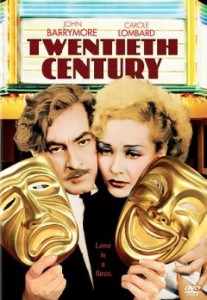
Twentieth Century
by Howard Hawks
[DVD]
view/request
John Barrymore and Carole Lombard star in, what some site as the first screwball comedy, Twentieth Century. The film’s director, Howard Hawks, who delivered several box office smashes in the form of the more macho features (his credits include the original Scarface, Rio Bravo,the Big Sleep), was also adept to orchestrate the gut busting comedy piece. He later went on to direct other classics in this genre such asBringing Up Baby and His Girl Friday.
Sort of a silly version of the Red Shoes (though the film we’re discussing predates it), Twentieth Century presents a didactic relationship in the entertainment business. Oscar Jaffe, a Broadway producer played by Barrymore, casts an unknown to actress to play the lead in his newest production. This actress (brilliantly performed by Lombard) is put through the ringer and subjected to plenty of condescending exercises and verbal tirades by this larger than life figure. Despite his questionable methods and erratic behavior, Jaffe manages to mold this unknown into a household name. He also dictates that her household name shall be “Lily Garland”.
Once Garland has attained fame and fortune, she no longer needs the temperamental Oscar Jaffe in her life. As a result, the producer soon falls on hard times. Not only does he realize that he needs Garland back in his life for professional reasons, he discovers that he’s madly in love with the starlet! His crusade, at times devious, to win back her favor knows no bounds.
Barrymore’s portrayal of Jaffe, which is grandiose in one instant and hilariously pathetic the next, propels the story at a breakneck pace. Filled with slapstick gags and wild monologues, the actor gives one of the most memorable comedic performances committed to film.
Reviewed by Jason
Tagged: Comedy
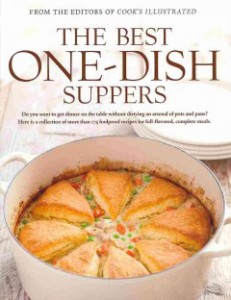
The Best One Dish Suppers
by the editors of Cook’s Illustrated
[Book]
view/request
This cookbook is a collection of recipes from American’s Test Kitchen that are all made in one pan or one pot or a dutch oven or a slow cooker. There are 180 recipes with 169 illustrations and tips, tricks and helpful hints accompany the step by step recipes. The recipes include stews, soups, casseroles, pot pies and stir-frys. Several vegetarian options are also included. This cookbook is great to try out some new twists on comfort foods and cool weather favorites.
Reviewed by Jude
Tagged: Cooking, Food, Non-fiction
Hell is Empty
by Craig Johnson
[Book]
view/request
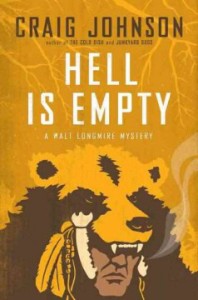
Craig Johnson’s Walt Longmire series is one of my favorites. Part mystery, part western, set in the remote and mythical Absaroka County, Wyoming with a wonderful cast of characters, with sheriff Walt Longmire at the center. I was thrilled when I heard that A&E has been filming the new series
Longmire based on these books.
Walt starts off on routine prisoner exchange, dreaming of lasagna and his daughter’s upcoming marriage. The prisoner exchange hits some complications and Walt heads off into the Bighorn Mountains after the prisoner Raynaud Shade, a Crow Indian and a sociopath who claims to hear voices and seems to know that the (same?) voices have also spoken to Walt when he has been in the mountains. Walt is led through the icy hell of the peaks of Wyoming by Virgil, coming across his own demons, and yes, carrying
Dante’s Inferno to complete the metaphor. The latest in the Walt Longmire series; start with
The Cold Dish.
Reviewed by Molly
Tagged: Fiction, Mystery, Western, Wyoming
Grateful Dawg
by Gillian Grisman
[DVD]
view/request
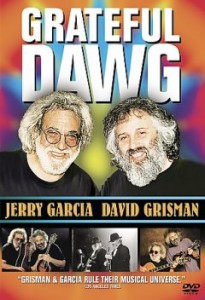
This film celebrates the musical collaborations of Jerry Garcia and David Grisman. The film, by David’s daughter Gillian, is an affectionate tribute to the music created when these two musical giants worked together. Garcia and Grisman shared a common enthusiasm for bluegrass and American roots music, but Grisman had a tight and disciplined approach to the music, while Garcia was well known for his relaxed attitude. Something special happened when they worked together, as Grisman loosened up, Garcia became more focused, and each took on some of the best qualities of the other.
This film isn’t particularly rich in storytelling, and it is nothing special to look at, but it contains some good interviews with Grisman, Garcia, and their many collaborators, including Vassar Clements and Peter Rowan of Old and in the Way. The real focus of the film, however, is the music, and the camaraderie between these great musicians, and that is how it should be. The film’s editors often made the unfortunate decision to show footage, often in slow motion, which doesn’t match the music being played, but this is easy to over look. All you have to do is close your eyes and listen—and listening to these two play together is a joy.
Reviewed by Ben
Tagged: Bluegrass, Documentary, Folk music
Under the Volcano
by John Huston
[DVD]
view/request
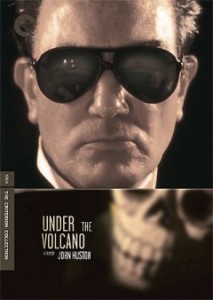
Albert Finney stars in one the last films by the prolific American director, John Huston. Under the Volcano is based on the semi-autobiographical novel by Malcolm Lowry.
Delusions and alcoholism are the central themes of this film. We join Finney’s character, Geoffrey Firmin, just after the Day of Dead fiesta in Mexico in 1939. Firmin, who is an alcoholic and bitter English consul, wanders throughout a beautiful Mexican village with his life spiraling out of control. Though he tries to pull himself together when his estranged wife (played by Jacqueline Bisset) stops for a visit, moments of clarity and decent behavior are few and far between.
Finney’s portrayal of this troubled character would most likely be over the top handled by another actor. He manages to create someone loud and belligerent, pitiful and charming on some occasions. We want him to dig himself out of this self-inflicted crisis, but we understand that he’s incapable. Huston paints this personal drama with the beauty of the Mexican village and also a strange wallpaper of supporting characters (including the director/writer/actor Emilio Fernández).
This Criterion Collection dvd has a painstakingly assembled bonus disc that profiles John Huston, provides behind the scenes footage and includes the film Volcano: An Inquiry into the Life and Death of Malcolm Lowry (narrated by the late Richard Burton).
Reviewed by Jason
Tagged: Alcoholism, Drama
The Bones of All Men
by Philip Pickett and Richard Thompson
[Music CD]
view/request
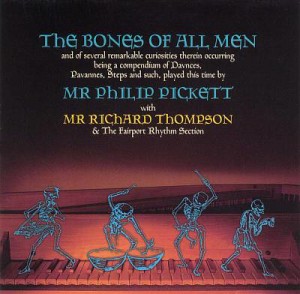
This album marries two of my favorite genres of music: specifically, 16th century Renaissance dances and British folk-rock of the 1960s and ’70s.
Richard Thompson and some ex-Fairport Convention comrades joined conductor and multi-instrumentalist Philip Pickett (who has Albion Band credentials as well as early music) in 1998 to rock out on a selection of tunes by William Byrd’s contemporaries. When I used to play electric harpsichord for English Country Dancing back in the early ’90s, this was the sort of sound I dreamed of achieving. Imagine a note-perfect recorder consort accompanied by Dave Mattacks on drums, or dueling krumhorn and electric guitar, or virginal with a very electrified bass continuo. The tunes are brilliantly arranged, irresistibly driving, reverently irreverent (or vice versa), passionately fun and absolutely classic in every sense of the word. Turn it up, way up.
Reviewed by Faith
Tagged: Early music, Rock music
Welcome to the Monkey House
[DVD]
view/request
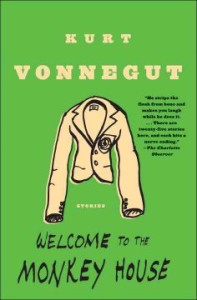
Selections from Kurt Vonnegut Jr.’s Welcome to the Monkey House, an anthology of shorter fiction, appeared on the Showtime channel in the early 1990’s. The series was on the air for a brief time, but all of the episodes exist on a dvd that we’ve just received from the Pleasant St. Video collection.
Welcome to the Monkey House is fascinating from the outset; the author makes an on camera introduction to the episodes. His opening dialog is the only instance of seeing him on film/tape that I can recall (until this moment, I’ve used my imagination to estimate his mannerisms via book jacket photographs!).
The stories and the overall feel of the series strike a kinship with David Lynch and Mark Frost’s Twin Peaks. Both idiosyncratic television programs were on the air around the same time, draw from 1950’s style and also deal with the abnormal. A mysterious double life, a sadistic battle of wits involving humans as chess pieces, a woman’s obsession with home design catalogs and a child’s eventful night without a babysitter all feature in Welcome to the Monkey House.
Vonnegut has always struck me as someone who has the ability of skillfully introducing science fiction elements or ideas into his writing without having them seem far removed from contemporary society. Though he often delves into the world of science fiction, I can’t classify him solely as a science fiction writer. His laconic central characters tend to ease us into strange, new worlds by having a dark sense of humor or an overall surly, sarcastic attitude toward the present state. For instance, a soap opera actor portraying a doctor is lead into mansion that houses an elderly woman whose only original body part is her head. The actor is initially surprised, but accepts the situation within moments after the orchestrator of this scientific achievement gives his explanation in the most blasé fashion possible.
Kurt Vonnegut’s stories are wonderfully captured in this series and feature performances by Madeline Kahn, Frank Langella, Jon Cryer and many more fine character actors. It was a short lived television program, but it managed to capture some of the author’s bizarrely brilliant concepts.
Reviewed by Jason
Tagged: Drama, Fiction, Humor, Science fiction
The Broken Shore
by Peter Temple
[Book]
view/request
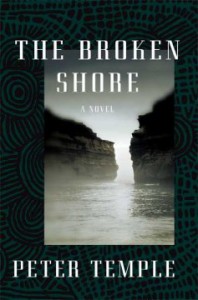
Joe Cashin is a big city cop who has gone back to his childhood home on the coast of South Australia to recuperate, physically and mentally. When a local millionaire is murdered, Cashin won’t accept the easy story that some local aboriginal boys are responsible. In the course of the investigation, Australian political and social divisions are examined. The sense of place is practically another character, but be warned: this is a darker Australia than is often portrayed in the media. Includes helpful Glossary of Australian Terms. Temple is the winner of five Ned Kelly Awards by the Crime Writers’ Association of Australia.
Reviewed by Molly
Tagged: Australia, Fiction, Mystery
Glorious
by Eddie Izzard
[DVD]
view/request
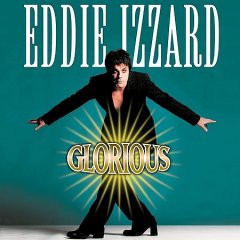
I love Eddie Izzard’s stand-up. In Glorious he lopes across the stage imitating an evil giraffe, he runs in mock fright exclaiming, “I’m covered in bees!”, and he delivers a stream of unconventional witticisms, comical sound effects, and insightful observations.
Eddie’s jokes are carefully written but his delivery is casual and off the cuff. His jokes often rely on gesture and facial expressions, never more so than in his routine on “machines that lie”, during which he mimes the frustrations of making good toast and demonstrates the visual similarity between someone adjusting the tap in a shower and a safebreaker. (He ends this routine with a wonderful visual pun which I will refrain from describing—you will appreciate it better if it takes you by surprise.)
I don’t care much for stand-up, but I make an exception for Izzard’s smart, irreverent, performances. His shows are always entertaining andGlorious is one of his best.
Reviewed by Ben
Tagged: Comedy
Return To Cookie Mountain
[Music CD]
view/request
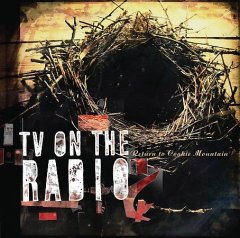
Return To Cookie Mountain (2006), by the Brooklyn-based quintet TV On The Radio, was my introduction to this group’s music and I quickly became a fan. I really enjoy the unique harmonies and vocal layerings of the two primary vocalists Tunde Adebimpe and Kyp Malone. The melodies are also exceptional and have been described as “atmospheric” and “spacious” Their music is not easy to categorize but some close approximations include: indie-rock, soul and trip-hop. Repeated listenings to this CD always reveal more pleasurable discoveries of their unique sound. Two outstanding tracks for me are “I Was A Lover” and “A Method”.
Reviewed by Susana
Tagged: Indie rock, Rock music